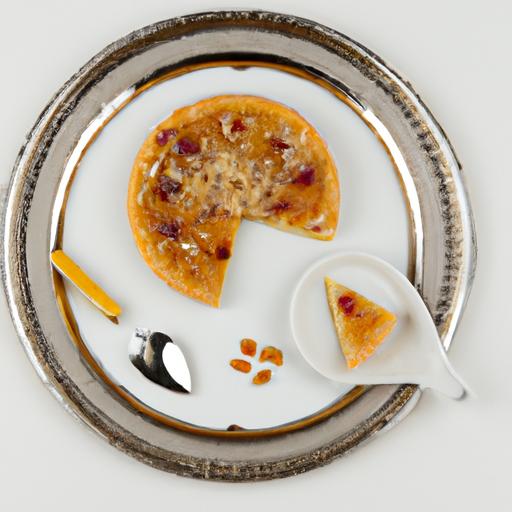

Nestled in the sun-drenched hills of Galicia, where history and tradition intertwine like the delicate threads of an old tapestry, lies a dessert that is much more than just a cake. Tarta de Santiago, Spain’s beloved almond treasure, carries with it centuries of cultural heritage, a story steeped in religious symbolism and artisanal craftsmanship. with its golden crust dusted in powdered sugar and the iconic cross of Saint james elegantly etched atop,this humble tart beckons dessert lovers to savor not only its rich,nutty flavors but also the sweet legacy of a region proud of its past. Join us as we explore the origins, significance, and enduring charm of Tarta de Santiago – a culinary jewel that continues to captivate palates and hearts around the world.
Mastering the Art of Almonds in Spanish Pastry Tradition
The Sweet Legacy of Tarta de Santiago: Spain’s Almond Treasure begins with the heart of its recipe-the humble almond. This iconic Spanish pastry captures centuries of tradition tucked into every tender crumb. Originating from Galicia, this almond tart is a tribute to Saint James (Santiago), whose cross-shaped decoration dusted with powdered sugar graces the top. My first bite of Tarta de Santiago was a revelation: the delicate,moist texture infused with toasted almonds and sweet citrus notes created an extraordinary harmony.It’s more than just dessert; it’s a story baked into a cake that has enchanted both locals and travelers alike.
Prep and Cook Time
- Readiness Time: 15 minutes
- Cooking Time: 40 minutes
- Total Time: 55 minutes
Yield
Serves 8 generous slices
Difficulty Level
Medium – Ideal for bakers with prior experience in working with almond flour and delicate batters
Ingredients
- 200g blanched almond flour (finely ground, unsweetened)
- 200g granulated sugar
- 4 large eggs at room temperature
- zest of 1 organic lemon (finely grated)
- 1 teaspoon ground cinnamon
- Powdered sugar, for dusting
- Butter, for greasing the pan
Instructions
- preheat your oven to 350°F (175°C). Lightly grease a 9-inch (23 cm) springform pan with butter and line the bottom with parchment paper for easy removal.
- In a large mixing bowl, whisk the eggs and granulated sugar vigorously until the mixture turns pale and fluffy-this aeration is key for a light crumb, about 3-4 minutes using an electric mixer at medium speed.
- Fold in the almond flour, lemon zest, and ground cinnamon gently with a spatula to keep the mixture airy. Avoid overmixing to maintain the cake’s tender texture.
- Pour the batter into the prepared pan, smoothing the top with a spatula.Tap the pan lightly on the counter to release any large air bubbles.
- Bake for approximately 35-40 minutes. The cake should be golden on top,slightly firm to the touch,and a toothpick inserted into the center comes out clean or with a few moist crumbs.
- Allow to cool completely in the pan. Once cooled, carefully release the springform and transfer the tart to a serving plate.
- before serving,dust the entire top generously with powdered sugar. Traditionally, a stencil of the Cross of saint james is placed on the tart before dusting, then removed to reveal the iconic emblem in almond treasure fashion.
Chef’s Notes and Tips for Success
- For an authentic texture, choose almond flour that’s finely ground and free of skins for the smoothest crumb and vibrant almond flavor.
- If you cannot find almond flour,finely ground blanched almonds from your local market can be processed briefly in a food processor,but be careful not to over-process and release oils.
- Fresh lemon zest is essential-it’s the radiant note that cuts through the sweetness perfectly; avoid dried zest substitutes.
- ensure eggs are at room temperature to achieve maximum volume and emulsification in the batter.
- Allow the tart to rest for several hours or overnight; this enhances flavor blending and moistness.
- If you prefer a gluten-free dessert, this classic rendition is naturally free of wheat flour, making it perfect for gluten-sensitive guests.
- Use a metal stencil for the Saint james cross or create your own with parchment paper for a beautiful presentation.
Choosing the Best Almonds for an Authentic Tarta de Santiago
Tarta de santiago’s charm lies in its simple yet bold almond flavor. The Sweet legacy of Tarta de Santiago: Spain’s Almond Treasure is a party of premium almonds. Spanish Marcona almonds are frequently enough heralded as the finest choice due to their buttery, soft texture and sweeter taste compared to standard almond varieties. When selecting almonds, opt for fresh, plump nuts without blemishes. Blanch and dry them if needed, or trust high-quality almond flour brands that source Marcona or similar sweet almonds. The freshness directly impacts the natural oils and sweetness that give this tart its luxurious mouthfeel.
Pairing Tarta de Santiago with Wines and Coffees for the Perfect Experience
Enjoying The Sweet Legacy of Tarta de Santiago: Spain’s Almond Treasure is not complete without the perfect pairing. Traditionally, this almond gem pairs exquisitely with aromatic, lightly sweet wines like Spanish sherry-specifically a dry Amontillado or Palo Cortado that contrasts the tart’s sweetness and enhances the nutty notes. For those avoiding alcohol, a strong Spanish coffee or espresso with subtle chocolate undertones complements the tart’s cinnamon and lemon flavors perfectly.Consider serving alongside a lightly whipped cinnamon-spiced cream or a scoop of vanilla gelato to elevate your tasting.
| Nutrient | Per Serving |
|---|---|
| Calories | 320 kcal |
| Protein | 8g |
| Carbohydrates | 30g |
| fat | 18g |
Explore more almond-based Spanish desserts to continue your culinary journey through Spain’s rich pastry tradition.

Q&A
Q&A: The Sweet Legacy of Tarta de Santiago: Spain’s Almond Treasure
Q1: What is Tarta de Santiago and why is it so special?
A1: Tarta de Santiago is a traditional Spanish almond cake hailing from Galicia, in the northwest of Spain. Its simplicity is its charm-moist, tender, and rich with the nutty aroma of almonds, it embodies a centuries-old legacy. Traditionally dusted with powdered sugar in the shape of the Cross of Saint James, this cake delivers a taste that’s both humble and regal, reflecting the deep cultural roots of the region.
Q2: Where does the name “Tarta de Santiago” come from?
A2: The name translates to “Cake of Saint James,” paying homage to Santiago de Compostela, the capital of Galicia and the endpoint of the famous pilgrimage route, the Camino de Santiago.the iconic cross that decorates the cake is a symbol connected to Saint James himself, weaving a spiritual and historical thread through every crumb.
Q3: What are the main ingredients of Tarta de Santiago?
A3: The cake is delightfully simple, made primarily from ground almonds, eggs, and sugar. Sometimes a hint of lemon zest or a splash of cinnamon is added to enhance the almond’s natural flavor. Notably absent are flours or leavening agents, which gives the cake its uniquely dense and moist texture.
Q4: How is Tarta de Santiago traditionally served?
A4: Traditionally, the cake is served at room temperature, often cut into generous wedges. It’s common to present it after a meal, accompanied by a cup of coffee or a fragrant herbal tea. Its rich almond flavor makes it a perfect ending to a leisurely lunch or a special gathering.
Q5: What is the cultural significance of the powdered sugar cross?
A5: The powdered sugar cross is not only decorative but deeply symbolic. Known as the Cross of Saint James (Cruz de Santiago), it connects the cake to the religious and historical identity of Galicia.The stencil is placed carefully on the cake before dusting with sugar, creating a striking contrast that honors centuries of tradition.
Q6: Can tarta de Santiago be found outside of Galicia?
A6: Absolutely! While the cake’s roots are firmly planted in galicia, its fame has spread far and wide. You’ll find versions of it in bakeries and Spanish restaurants across Spain and around the world, each preserving the almond-rich essence and the iconic cross. It serves as a delicious ambassador of Galician culture wherever it appears.
Q7: What is the best way to store Tarta de Santiago?
A7: Thanks to its dense, moist texture, Tarta de Santiago keeps well. It’s best stored covered at room temperature for up to two days or refrigerated for up to a week. Just bring it back to room temperature before serving to enjoy its full flavor and tender crumb.
Q8: Are there any interesting variations of Tarta de Santiago?
A8: While the classic recipe is beloved for its purity, some bakers experiment by incorporating subtle flavors like orange blossom water or vanilla. Others may serve it with a side of fresh seasonal fruit or a dollop of lightly whipped cream. Yet, thes additions always respect the almond cake’s delicate heritage, letting the star ingredient shine.
Q9: Why does Tarta de Santiago remain a cherished dessert in Spanish cuisine?
A9: Its timeless appeal lies in its perfect balance of simplicity and depth. Tarta de Santiago connects people to the earth through almonds, to history through the symbol of Saint James, and to community through shared tradition.Each bite offers not only sweet pleasure but a taste of Spain’s rich cultural tapestry.
in summary
As the final crumbs of Tarta de Santiago dissolve on the tongue, what remains is more than just a lingering sweetness-it’s a taste of centuries-old tradition, artistry, and cultural pride. This almond treasure, with its delicate texture and emblematic cross, is not merely a dessert but a delicious chapter in Spain’s rich culinary narrative. Whether enjoyed in a bustling Galician café or recreated in kitchens far beyond Spanish borders,Tarta de Santiago continues to connect generations,inviting all who savor it to partake in a legacy as enduring as the ancient pilgrimage paths it honors. In every bite, the past and present meld, reminding us that some flavors are timeless treasures, passed down not just through recipes, but through stories, rituals, and the shared joy of simple, exquisite sweetness.